August 27, 2026 · 7 min read
My Perspective on Concert Photography
A little over a year ago, I started photographing concerts and, lately, I have been thinking about what sets me apart and whether my photos truly deliver what I want them to deliver: the feeling, the impact, the memory.
I started analyzing the photos I have been taking and the feedback people give me: the enthusiasm I read in thank-you messages, what they tell me when they meet me in person. And so far, the feedback has been wonderful, with people saying they were moved by the result of my work.
I feel very grateful to be able to deliver work that is consistent and moves people.
Photographing is more than documenting
In my most recent assignment, I photographed an artist I admire, both for her music and for her professional journey. The simple act of taking those photos was already an achievement for me.
However, what exceeded my expectations was realizing that I had managed to create work that moved and captivated not only the artist, but also the other people portrayed and even many others who were not even at the venue that day.
Hearing someone I admire say that my work is fantastic did not inflate my ego or make me think I know everything. In truth, it made me cry and understand that it was only possible because of my focus and my study, in the constant pursuit of being better today than I was yesterday and better tomorrow than I am today. Her gratitude for the photos represented, to me, a validation that I am on the right path.
And what is the right path?
For me, it is the pursuit of doing what I love.
Even if I fail, I tried. And I could still be proud of the attempt, of living with the knowledge that I tried and failed.
What I cannot do is live in fear of trying, never taking the first step in pursuit of my dream or my happiness.
It is with that same passion that I approach my photography work. The next photo assignment is not "just another job".
Every photo I take is handled with care, from capture to delivery. I become emotionally involved in the work so that the result is impactful and contributes to building a collective memory that honors the artist, the show, the event, and the people portrayed.
IT IS NEVER "JUST ANOTHER JOB."
The most important work in my career is the one I am doing right now.
The photographer is also part of the show
For the past year, I have been backstage at events, going up and down stages, being in the presence of major artists, and understanding the kinds of challenges that nobody sees from the crowd.
And it is precisely because I am there backstage that I understand a little better how event production works. There are dozens of people working so that a few hours of a show can happen. Each of them has a role, a space, and a responsibility.
That is why I created a few rules of conduct for my work. They are not rules imposed by anyone. They are principles I chose to follow because I am also part of the context that makes the show happen.
It is worth listing some of those rules:
-
Punctuality is respect -- often, being punctual means arriving at the venue hours before the show. It is the time I need to introduce myself to the production team, get familiar with the environment, understand the access routes, set up my equipment, and make sure I am ready when the work begins.
-
Never stop in the middle of the path -- there are dozens of people trying to do their own jobs so that a show can happen. Stopping in the middle of a passageway, on a staircase, or in a corridor can block someone's path and cause a serious problem for the artist, the technicians, or the event production team.
-
Wear black and stay discreet -- black is one of the colors that stands out the least in a crowd and, above all, when we are on a dark stage. My goal is to be present without drawing the audience's attention to me. I take pride in doing my job and not appearing in any of the videos recorded by people in the crowd. When I watch stories from the show and realize I did not appear in any of them, I know I successfully fulfilled an important part of my work: being present without interfering with the experience of the people watching.
-
Being in the pit does not mean giving up courtesy -- the pit can also be used by people with accessibility needs, such as wheelchair users, and they deserve to watch the show like anyone else. That is why I always look behind me, crouch whenever possible, and try to move in a way that does not obstruct the view of those who paid for their ticket and have every right to be there. Having access to a privileged space does not give me the right to ignore the people around me.
-
Never act like a fan. Greet politely, yes -- as the photographer for an event or a band, I may have backstage access and access to artists in a way the audience does not. That makes it even more important to remain professional. With a camera in my hand, I am working and fulfilling my role like anyone else there. After the show, if a natural opportunity arises, I can greet the artist and say that I admire their work. If an opportunity for a less formal conversation ever comes up, that is another story. Access should not be confused with intimacy.
-
Every job is unique -- I may photograph the same band again or a different band at the same venue, but it will never be exactly the same job. The angles change, the clothes change, the expressions change, the audience changes, and the energy of that moment is never repeated. It is my job as a photographer to notice those differences and find images that demonstrate the importance of that specific show.
-
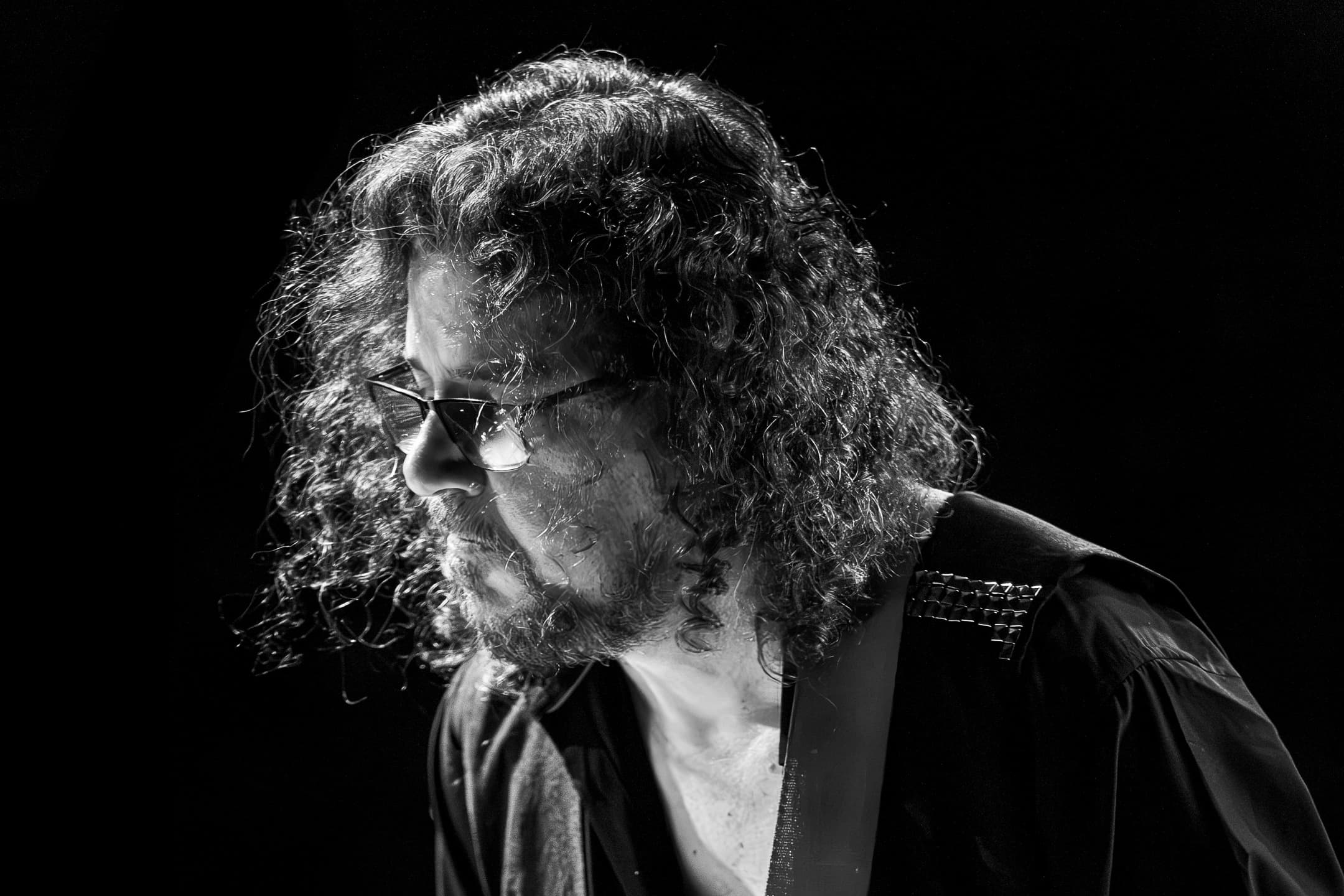
Capturing essence and creating memories -- my job is to capture the essence of the show, regardless of the size of the audience, the venue, or the band. It also does not matter whether the artists "know how to pose." There will always be a moment when the guitarist launches into a solo and disappears into an emotional journey, when the drummer is completely focused, or when the singer exchanges glances with someone in the crowd. My job is to stay attentive enough to notice those moments and be ready to capture them when they happen.
You do not need to worry about "forcing" poses.
I do not want to simply photograph someone standing on a stage. I want to photograph what happens when the music truly begins.
In the end, maybe that is what sets me apart.
I do not want to deliver only beautiful photographs. I want to deliver images that make someone feel again what they felt when that song started playing.
To me, that is what photographing is: transforming a moment that will never happen again into a memory that can last forever.